







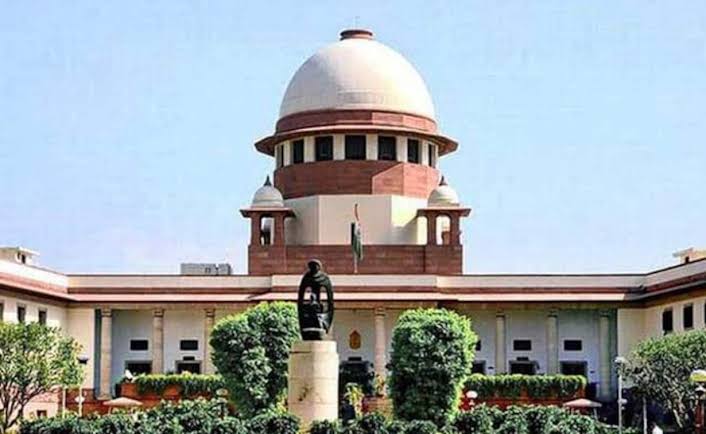
New Delhi: Supreme Court Seeks ECI Response on Plea Challenging CEC Gyanesh Kumar’s Powers
New Delhi, 5th October 2026: The Supreme Court on Monday sought a response from the Election Commission of India (ECI) and the three Election Commissioners on petitions challenging Chief Election Commissioner Gyanesh Kumar’s alleged exercise of powers without the concurrence of the other members of the poll panel.
A three-judge bench headed by Chief Justice of India Surya Kant and comprising Justices Joymalya Bagchi and V. Mohana issued notices to the ECI, CEC Gyanesh Kumar, Election Commissioners Sukhbir Singh Sandhu and Vivek Joshi. However, the court declined to pass an interim order seeking the suspension of the Chief Election Commissioner.
The petitions primarily challenge decisions related to the Special Intensive Revision (SIR) of electoral rolls and question whether the CEC can exercise powers vested in the multi-member Election Commission without the approval of the other commissioners.
Petitioners seek suspension of CEC
Appearing for the petitioners, Senior Advocate Vikas Singh argued that the credibility of the Election Commission was at stake and sought interim relief against CEC Gyanesh Kumar.
During the hearing, Singh told the bench, “If no interim order is passed, the country will burn.” He also urged the court to suspend the Chief Election Commissioner pending consideration of the matter.
The Supreme Court, however, declined to grant the interim relief at this stage and instead sought a detailed response from the Election Commission and the commissioners.
The bench said it expected the respondents to provide a clear explanation regarding the allegations raised in the petitions.
Court examines collective decision-making
The petitions rely on Article 324 of the Constitution, arguing that the powers relating to the superintendence, direction and control of elections are vested in the Election Commission as a commission rather than in the CEC individually.
The petitioners have also referred to Section 18 of the Chief Election Commissioner and Other Election Commissioners (Appointment, Conditions of Service and Term of Office) Act, 2023, which deals with the decision-making process within the poll panel.
During the hearing, CJI Surya Kant observed that election commissioners are expected to take decisions unanimously and that a majority decision would apply when unanimity is not possible.
The bench also indicated that it could examine individual decisions cited by the petitioners if the records establish that they were taken without the required concurrence.
14 objections cited by petitioners
The petitions refer to at least 14 objections allegedly recorded by Election Commissioners Sukhbir Singh Sandhu and Vivek Joshi between October 2025 and August 2026.
The objections reportedly concern several decisions and administrative steps allegedly taken without their approval. These include changes to Form 6, access to the electoral-roll database, communications and orders issued in the name of the ECI, and the absence of agendas and minutes for certain meetings.
The petitioners have also raised concerns over foreign travel allegedly undertaken without approval, appeals before tribunals in West Bengal and what they describe as the “gradual centralisation” of the electoral-roll database.
The pleas further challenge changes in the work allocation of the Election Commission’s IT establishment.
Pleas seek SIT probe into alleged voter deletions
Apart from challenging the decision-making process within the Election Commission, the petitions seek an SIT investigation into alleged voter deletions and question the manner in which electoral-roll revisions and the SIR were conducted.
The petitioners have sought a declaration that powers vested in the Election Commission under Article 324 cannot be exercised or represented as decisions of the poll body outside the constitutional and statutory framework governing the multi-member commission.
The matter was first mentioned before CJI Surya Kant on September 29, following which the court listed it for hearing on October 5. The Supreme Court will now consider the responses of the Election Commission and the three Election Commissioners before deciding the further course of action.