





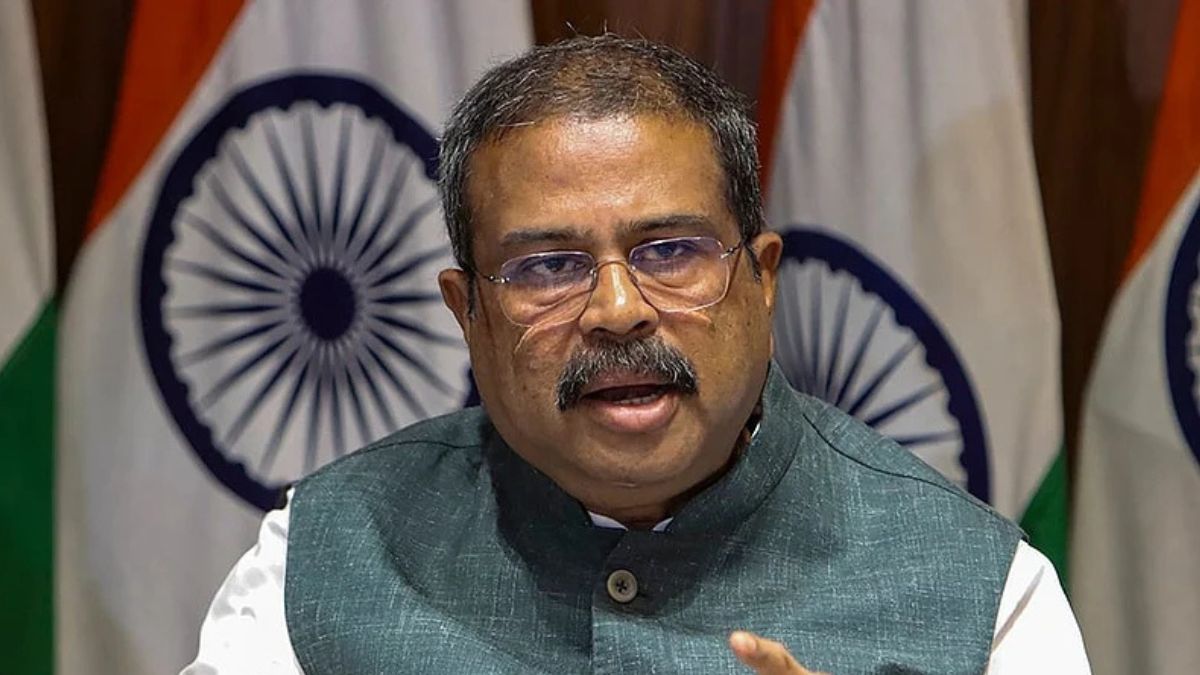
Why Has Education Minister Dharmendra Pradhan Not Resigned Yet? Political Experts Explain the Government’s Stand Amid NEET Paper Leak Protests
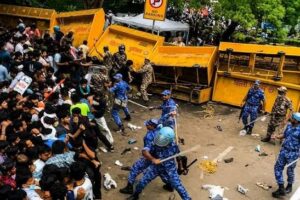
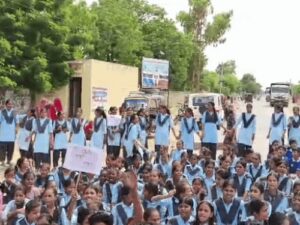
New Delhi, 24th July 2026: As protests over the alleged NEET paper leak continue to intensify, the demand for the resignation of Union Education Minister Dharmendra Pradhan has become the central rallying point for students, opposition parties and the Cockroach Janata Party (CJP).
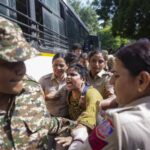
The agitation has entered its second month, with demonstrators continuing their sit-in at Jantar Mantar, activist Sonam Wangchuk recently ending his 27-day hunger strike, Rahul Gandhi staging a protest outside the Prime Minister’s residence, and Parliament witnessing repeated disruptions over the issue.
Despite mounting political pressure, the Centre has so far not asked Pradhan to step down. Political analysts say the decision reflects broader political and strategic considerations rather than the paper leak controversy alone.
Four key reasons cited by political experts
Several political commentators, including Rashid Kidwai, Amitabh Tiwari, Nishant Kumar, Ashutosh and Harshvardhan Tripathi, believe multiple factors are influencing the government’s decision.
1. Resignation could be seen as an admission of guilt
According to political analyst Rashid Kidwai and strategist Amitabh Tiwari, accepting Pradhan’s resignation at this stage could be interpreted as an acknowledgement that the government bears responsibility for the alleged paper leak.
Instead, the Centre has sought to project itself as acting decisively through investigations, policy announcements and legal reforms.
Over the past week, the government has announced a series of measures, including:
Prime Minister Narendra Modi assuring swift action against those responsible.
The Centre expressing readiness to discuss the issue in Parliament.
The announcement of dedicated fast-track courts for paper leak cases.
Plans to introduce a tougher anti-paper leak law with stricter punishment.
Experts believe these steps are intended to demonstrate proactive governance without conceding political responsibility.
2. Decision-making is closely linked to the Prime Minister’s Office
Political observers argue that the Modi government’s functioning is widely perceived as being driven by the Prime Minister’s Office (PMO), with major policy decisions closely associated with Prime Minister Narendra Modi.
Kidwai said removing the Education Minister could trigger questions about the broader functioning of the government and whether institutional lapses extended beyond an individual minister.
Nishant Kumar similarly noted that major policy decisions and crisis management are generally coordinated through the PMO, making ministerial accountability more politically complex.
3. BJP reluctant to create a precedent for resignations
Experts also suggest the BJP leadership is cautious about establishing a precedent where sustained protests automatically lead to ministerial resignations.
The government’s position is viewed in the context of previous statements made during the NDA administration. In 2015, amid demands for the resignation of then External Affairs Minister Sushma Swaraj, then Union Home Minister Rajnath Singh had remarked that ministers do not resign simply because allegations are made, contrasting the NDA government’s approach with that of the previous UPA government.
Political commentators say the current government continues to follow a similar approach.
4. Coalition politics and electoral calculations
Analysts also point to political arithmetic within the ruling National Democratic Alliance (NDA).
Amitabh Tiwari observed that the current government depends on coalition partners, unlike previous terms when the BJP enjoyed a stronger parliamentary majority. Any major political decision, including the removal of a Cabinet minister, is therefore likely to be weighed against its potential impact on alliance stability and upcoming Assembly elections.
Some experts also argue that accepting one resignation could encourage demands for accountability from ministers handling other contentious portfolios.
Government and opposition remain at odds
While the government has repeatedly offered to hold discussions with CJP leaders and has announced legal and institutional measures to tackle examination fraud, protesters continue to insist that the resignation of Education Minister Dharmendra Pradhan remains their primary demand.
CJP has maintained that the agitation at Jantar Mantar will continue until all its demands are addressed.
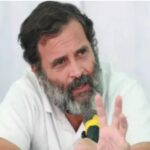
Opposition leader Rahul Gandhi has also demanded Pradhan’s removal, arguing that accountability should accompany the government’s policy announcements.
Will Dharmendra Pradhan eventually resign?
Political experts remain divided on the question.
Rashid Kidwai believes the government had an earlier opportunity to replace the minister during a Cabinet reshuffle but chose not to do so for political reasons. According to him, a resignation is likely only if the political cost of retaining Pradhan becomes greater than removing him.
Harshvardhan Tripathi believes a resignation remains possible, though its timing is uncertain. He argues that the issue is ultimately one of political accountability rather than prestige.
Amitabh Tiwari also does not rule out the possibility of Pradhan stepping down but believes the government may wait until after key political developments, including upcoming state elections.
Nishant Kumar noted that Prime Minister Modi has periodically reshuffled his Council of Ministers, typically during Cabinet expansions or reorganisations rather than in response to immediate political pressure. He believes that if any decision is taken regarding Pradhan, it is more likely to come as part of a broader Cabinet reshuffle than as a direct response to the ongoing protests.