







Gen Z in Politics: Young Indians Have a Voice Online, But Limited Representation in Power
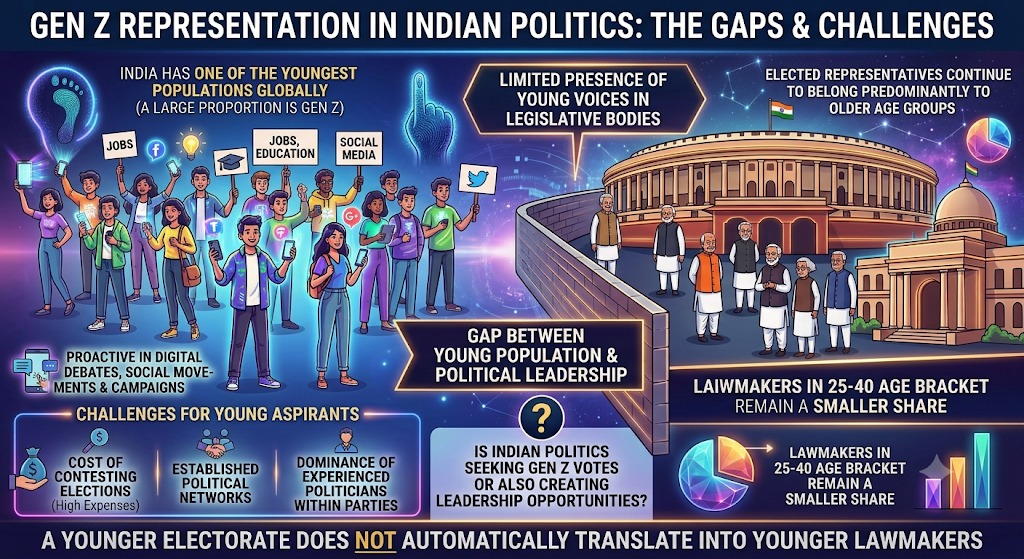
New Delhi, 6th August 2026: India has one of the youngest populations in the world, with Gen Z emerging as a significant social and political force. However, despite their growing presence in public discussions, elections and digital spaces, their representation in Parliament and state assemblies remains limited.
The gap between India’s young population and its political leadership continues to raise questions about whether young voices are finding adequate space in the country’s decision-making bodies.
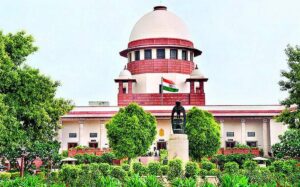
According to political data, a large section of elected representatives continues to belong to older age groups, while lawmakers in the 25-40 age bracket remain a smaller share of assemblies and Parliament. The trend reflects a wider challenge for young aspirants trying to enter electoral politics.
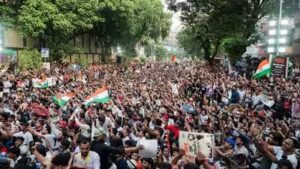
Gen Z, generally considered those born between the late 1990s and early 2010s, has increasingly participated in public debates, social movements and digital campaigns. Issues such as employment, education, transparency and governance have become key concerns for young citizens, making them an important demographic for political parties.
However, entering electoral politics remains challenging for many young leaders due to factors such as the cost of contesting elections, established political networks and the dominance of experienced politicians within parties.
While political parties frequently focus on attracting young voters through campaigns and social media outreach, the representation of young leaders within legislative bodies has not increased at the same pace.
Experts argue that a younger electorate does not automatically translate into younger lawmakers. Greater participation within party structures, opportunities for new candidates and platforms for young leaders are required for increased representation.
The issue of representation has also extended beyond age, with debates around the participation of different sections of society in Parliament and state assemblies continuing to remain a key political discussion.
As Gen Z becomes an increasingly important voting bloc, the question remains whether Indian politics will only seek their votes or also create more opportunities for them to occupy positions of political power.