






Inside Story: The 6 M Factors Behind BJP’s Strong Performance in West Bengal
New Delhi, 4th May 2026: The Bharatiya Janata Party (BJP) appears to be heading towards a decisive victory in the 2026 West Bengal Assembly elections, potentially ending Mamata Banerjee’s 15-year rule. Counting of votes is underway, and early trends indicate a strong showing by the BJP, while the Trinamool Congress (TMC) is trailing.
According to initial trends, the BJP is moving towards a clear majority, placing it in a position to form a government in West Bengal for the first time. The outcome signals a major political shift in the state’s electoral landscape.
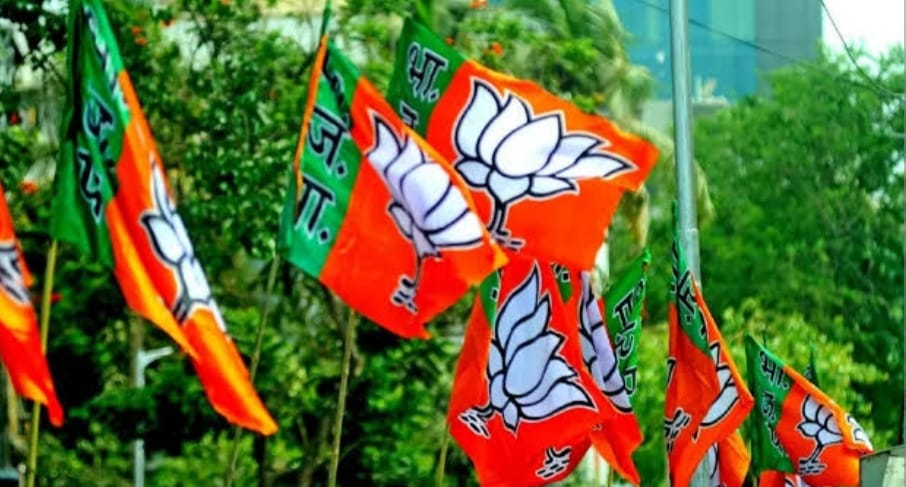
Celebrations have already begun among BJP workers, with visuals showing party supporters distributing jhalmuri. Reports also suggest that Prime Minister Narendra Modi may visit the party headquarters later in the evening.
Political analysts attribute the BJP’s performance to what is being described as the “6 M factors,” which have shaped the electoral narrative.
First M – Modi
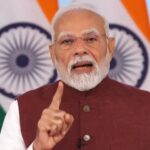
Prime Minister Narendra Modi’s extensive campaign is seen as a key driver of the BJP’s performance. During rallies, he targeted the TMC over corruption and governance issues while highlighting development.
Calling it a “wave of change,” Modi appealed to youth and women voters and repeatedly accused the ruling party of misgovernance and violence. During a campaign visit to Jhargram in April 2026, he briefly stopped to buy and eat jhalmuri from a local vendor, a moment widely circulated as a symbolic outreach to common voters.
Second M – Mamata
TMC chief Mamata Banerjee’s campaign focused on countering BJP’s allegations and defending her government’s record. However, analysts suggest that her efforts did not significantly alter the momentum.
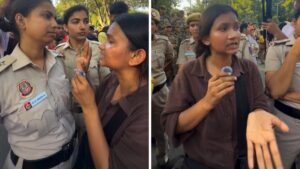
Key issues raised during the campaign included concerns around the Special Intensive Revision (SIR) of voter lists and the RG Kar hospital case, which triggered protests over women’s safety. The SSC recruitment controversy also remained a major point of criticism.
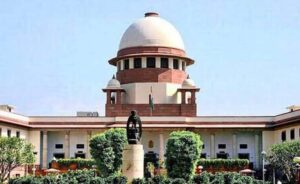
While welfare schemes such as Kanyashree and Lakshmir Bhandar continued to be highlighted, concerns over employment and development appeared to influence voter sentiment. Additionally, the Supreme Court’s decision to strike down OBC status for 77 communities affected a significant number of beneficiaries.
Third M – Migration and SIR
The BJP amplified the issue of alleged illegal immigration and linked it to the SIR exercise. In response, the TMC raised concerns about possible exclusion of genuine voters.
The debate expanded to include issues related to migrant workers and alleged targeting of Bengali-speaking populations in other states, turning it into a broader narrative around governance and identity.
Fourth M – Matua Community
The Matua community, largely comprising Namasudra (Scheduled Caste) Bengali Hindus, remains a significant electoral group in West Bengal, with influence across several constituencies, particularly in North 24 Parganas and Nadia.
Key demands of the community include citizenship rights under the Citizenship Amendment Act (CAA) and inclusion in voter rolls, making them an important factor in electoral calculations.
Fifth M – Women Voters
Women voters have emerged as a decisive electoral bloc in West Bengal, consistently recording higher turnout than men in recent elections.
The BJP focused heavily on issues of women’s safety, frequently referencing the RG Kar case during its campaign. The party also fielded Ratna Debnath, mother of a victim linked to the case, as a candidate to reinforce its messaging.
Additionally, the promise of 33% reservation for women in legislatures from 2029 was highlighted. With over 3.4 crore women voters in the state, their role remains crucial in determining outcomes.
Sixth M – Muslim Vote
The Muslim community, which constitutes around 27% of West Bengal’s population, has traditionally supported the TMC and plays a key role in the state’s electoral dynamics.
In this election, factors such as the SIR exercise and debates around a Uniform Civil Code (UCC) appear to have influenced voting patterns. The presence of AIMIM in select constituencies may also have contributed to shifts in vote distribution.
While some estimates suggest that voter deletions under SIR may have disproportionately impacted Muslim voters, official religion-wise data has not been released by the Election Commission.
Final phase dynamics
While early phases tested the BJP’s strength in North Bengal, the later phases saw intense contests in TMC strongholds such as Kolkata, Howrah, North and South 24 Parganas, Nadia, Hooghly, and East Burdwan.
These regions were crucial to the overall outcome, with multi-phase polling and the presence of additional political players adding complexity to the contest.
Voter impact
Estimates suggest that the SIR exercise may have led to a reduction in voter numbers, though official figures remain awaited. Political observers say such changes could have influenced the electoral arithmetic, particularly in closely contested seats.
As counting continues, the trends point to a significant political shift in West Bengal, with the BJP poised to make historic gains in the state.