







Parliament’s Record 100-Day Session Delay Sparks Political Row Over Delimitation
New Delhi, 23rd November 2026: Parliament’s Monsoon Session has remained formally unprorogued for a record period since August 13, as the Centre works to secure the numbers needed to pass a proposed constitutional amendment linked to delimitation and the implementation of 33% reservation for women in Parliament and state assemblies. The delay has triggered a political dispute over the government’s legislative plans, with the Opposition accusing the BJP of trying to secure a two-thirds majority before bringing the legislation back.
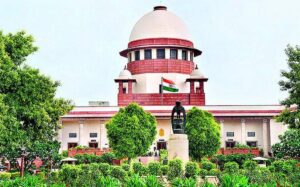
Both the Lok Sabha and Rajya Sabha were adjourned sine die on August 13 but have not been formally prorogued. According to reports, the 100-day period recorded on November 21 surpassed the previous record of 87 days set in 2008. Keeping a session unprorogued for an extended period is not, by itself, unconstitutional, but it allows the government to recall Parliament with shorter notice than would be required to summon a fresh session. The government is understood to be considering taking up the legislation during the next phase of Parliament’s proceedings in December.
The proposed legislation could increase the strength of the Lok Sabha from its current 543 seats to as many as 850 through delimitation, with one-third of the seats reserved for women. The exercise would also redraw constituency boundaries and could alter the distribution of parliamentary representation among states. The government has argued that the changes would make representation more proportionate and help operationalise the 33% women’s reservation ahead of the 2029 general elections.
The Opposition, however, has questioned why women’s reservation cannot be implemented within the existing strength of the Lok Sabha. Congress leader Jairam Ramesh has accused Prime Minister Narendra Modi and Union Home Minister Amit Shah of seeking a two-thirds majority to pass the delimitation legislation. He has also criticised the government for not holding structured consultations with political parties on the proposed changes. The Congress has called for the Lok Sabha to remain at 543 seats, with the existing representation of states retained, one-third of seats reserved for women and the arrangement frozen for 25 years.
The BJP has countered that the Opposition’s resistance to the delimitation exercise is obstructing the implementation of women’s reservation. The disagreement follows the defeat of the earlier legislative proposal in the Lok Sabha on April 17, when the government failed to secure the required numbers. The fresh push has therefore become as much a question of parliamentary arithmetic as one of how representation should be redistributed.
The debate has also drawn the Sharad Pawar-led Nationalist Congress Party (Sharadchandra Pawar) into focus. The BJP has reportedly reached out to regional parties, including the NCP (SP), whose eight Lok Sabha MPs could prove significant in efforts to secure the required majority. Prime Minister Modi’s phone call to Sharad Pawar while the veteran leader was recovering in the hospital has added to speculation about political outreach, although Pawar and Modi have not publicly confirmed the reported details of their conversation.
Supriya Sule, the NCP (SP) working president, has indicated that her party is open to considering the delimitation proposal if the increase in parliamentary seats is applied uniformly across states and women’s reservation is implemented simultaneously. She has argued that the growing number of voters in some constituencies makes parliamentary representation increasingly difficult to manage. However, she has said the party would examine the full text of the legislation before taking a final position. Sule has also denied that the NCP (SP) is joining the BJP-led NDA, despite speculation about a possible merger between the two NCP factions.
The discussions have prompted further speculation about the Pawar family’s political future and Sule’s possible role in national politics. However, reports of a potential senior government position remain speculative, and no formal announcement has been made.
With the next parliamentary proceedings expected in December, the government faces the task of building support for the proposed constitutional amendment while addressing concerns over federal representation. The outcome could influence the implementation of women’s reservation, the balance of parliamentary representation among states, and political equations in Maharashtra, where the NCP (SP) remains an important player in the wider Opposition landscape.