









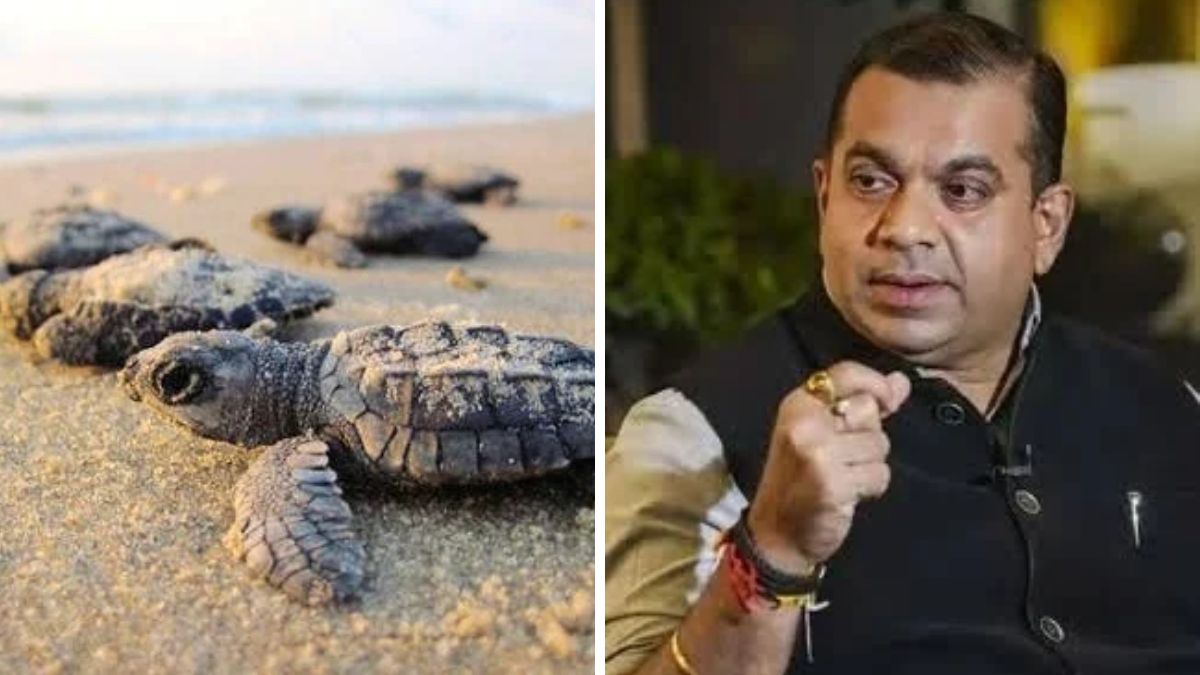
Goa Minister Flags Livelihood Concerns Over Proposal To Declare 21 Beaches as Turtle Nesting Sites
Panaji, Goa, 19th November 2026: Goa Tourism Minister Rohan Khaunte has called for a review of the Forest Department’s proposal to identify 21 additional beaches as protected nesting sites for Olive Ridley turtles, stating that conservation measures should also take into account the livelihoods of people dependent on beach tourism.
The proposal seeks to bring more beaches under the Coastal Regulation Zone (CRZ) Notification, 2019, as turtle nesting areas. It includes popular tourist destinations such as Vagator, Calangute, Candolim, Baga and Arambol in North Goa, along with Palolem, Patnem, Mobor and other beaches in South Goa.
Khaunte said that while the state supports turtle conservation, the Forest Department should reconsider the expansion and assess its impact on tourism-related businesses. He said existing nesting sites could be promoted as conservation tourism destinations instead of identifying additional beaches where people already depend on tourism for their livelihoods.
The minister also stressed the need to balance environmental protection with the interests of watersports operators, beach shack owners and others working in the tourism sector. The Forest Department had not issued an immediate response to his remarks, according to reports.
The four existing designated turtle nesting beaches in Goa are Morjim, Mandrem, Galgibaga and Agonda. The Forest Department’s proposal has sought the inclusion of additional coastal stretches under the CRZ notification.
Beaches designated as protected turtle nesting areas can face restrictions on activities that may disturb nesting turtles and hatchlings. These include a prohibition on setting up beach beds in the intertidal zone, restrictions on outdoor lighting, and requirements for muted indoor lighting with opaque shields on the seaward side.
The rules also prohibit loud music and beach parties beyond 6 pm in these areas. Such restrictions are intended to reduce disturbances during the nesting season.
The proposal has drawn objections from tourism stakeholders, particularly in Canacona in South Goa, where several beaches have been identified. Shack owners and other tourism-dependent businesses have raised concerns that restrictions could affect their operations and the livelihoods of local residents.
The Times of India reported that representatives of beach shack owners have urged the government to consult stakeholders before expanding the list of protected nesting sites. Fishermen have also sought clarity on how the proposed restrictions could affect traditional fishing activities and access to beaches.
The Forest Department’s proposal has been sent to the state Environment Department for consideration. The final decision on the additional sites and the restrictions that may apply will depend on the subsequent notification and regulatory process.